2ESOHistory
  • HOME
  • NOTEBOOKS
    • CLASSROOM NOTEBOOK >
      • Notebook Check Rubric
    • VOCABULARY NOTEBOOK >
      • Vocab Notebook Check Rubric
  • NEWS
    • DIRECTIONS >
      • TED Talks
    • HANDOUTS
    • News presentations >
      • 2014-15 >
        • 2ºF-2014-15
        • 2º C-2014-15
        • 2ºD-2014-15
      • 2015-16
    • NEWS CHECK RUBRICS
  • HISTORY
    • REVISION YEAR 1 >
      • GREEK CIVILIZATION >
        • Homework
      • ROMAN CIVILIZATION >
        • Ancient Rome in figures >
          • TEACHER´S MODEL
          • Student presentation 2015-16
    • Unit 1:The Early Middle Ages >
      • Power Point review
      • Homework
      • Student presentation >
        • 2013-14
        • 2014-15
    • Unit 2: Islam and its expansion >
      • Homework
      • Student Presentation >
        • Student presentation 2014-15 >
          • Student presentation 2015-16
      • Power point review
    • Unit 3:Feudal society >
      • Homework
      • Student presentation >
        • 2013-14
        • 2014-15
        • 2015-16
      • Power point review
    • MEDIEVAL ART >
      • Romanesque
      • Gothic Art >
        • Gothic Art homework >
          • Gothic art key
      • Power Point Review
    • Units 4 and 6: The iberian P. in the Middle Ages >
      • Homework
      • Student presentations >
        • 2013-14
        • 2014-15
        • 2015-16
      • Power point review
    • Unit 5: Cities, the middle class and cathedrals >
      • Student presentations >
        • 2013-14
      • Homework
      • Power point review
    • Unit 7: The early modern period. Geographical discoveries >
      • Homework
      • Student presentation >
        • 2013-14
        • 2014-15
      • Power point revision
      • Renaissance Art
    • Unit 8: Spanish Empire >
      • PPREVISON SPANISH HEGEMONY
      • Homework
      • Student presentations >
        • 2013-14
        • 2014-15
        • 2015-16
    • Unit 9: 17th century >
      • PPREVISON 17TH CENTURY
      • PP Revision Baroque
      • Homework
      • Student presentations
  • PROCEDURES
    • How to analyse a map
    • Timelines
    • Mind maps
    • Foldables >
      • Class models
  • GEOGRAPHY UP TO 2015
    • Student Presentations >
      • 2° - 2012-13
      • 2014-15
  • GEOGRAPHY 2015 ON
    • Units 10, 11 and 12: Topics and Tensions >
      • Homework
    • 2015-16
  • EXAMS
    • EXAM STUDY GUIDES
  • MAPS
  • CHARACTERS PROJECT
    • JOHN LENNON >
      • TASK AND GUIDELINES
      • STUDENT PRODUCTION
    • STEVEN SPIELBERG >
      • TASK AND GUIDELINES
      • STUDENT PRODUCTION
    • STEVE JOBS >
      • TASK AND GUIDELINES
      • STUDENT PRODUCTION
  • SUPPLEMENTAL MATERIALS
  • Carnival
  • IES ÁNGEL CORELLA
  • ANNOUNCEMENTS
    • Upcoming exams

PROJECT: ANCIENT ROME IN FIGURES

This a new project about ancient Rome that I hope you will enjoy...
It has several objectives:
  • Revise ancient Rome history
  • Work in groups, coordinating and cooperating your  individual work with your coworkers
  • Learn to research and categorize information
  • Improve your oral skills by presenting the poster  and its information to the rest of the class
  • Learn about power point and the posibilities it offers to express your ideas

TASK: POWER POINT POSTER OF ROMAN MAIN OR INTERESTING FIGURES

he task consists in creating a Power Point poster in which you will reflect interesting information about Rome but using just numbers, and a short text (the shortest possible) to explain every number. 
Steps to follow:
  1. Form groups of 4 to 5 people, depending on the number of people of your classroom. Make sure everyone is going to collaborate and work equally since you all are going to receive the same mark at the end.
  2. Search for information. Look for numbers that are significant to explain any possible features of Rome: demography (population), roads, buildings, traditions, food, sewer length, religion, gods, jobs, economy... whatever you think can be interesing to explain. 
  3. Group those numbers researched in areas or sectors that can be explained together.                                                                                                                                                                                                                                     Example:  numbers of Demography could include: population of the whole Roman Empire (it could be also expressed in several different dates like at the end of the Republica and then at the end of the Empire..); population of Rome, number of patricians, number of slaves, number of senators... and so on.
  4. Start the design of the Power Point Poster as a draft and work on it until you are completely satisfied with the result of your design.
  5. Revise the information and design all together until everyone agrees with the final result.
  6. Prepare your speech for your short presentation. You can choose a representative as a speaker to do this.

                                           Don´t hesitate to ask me for clarification

                             Work hard and enjoy the project!!!


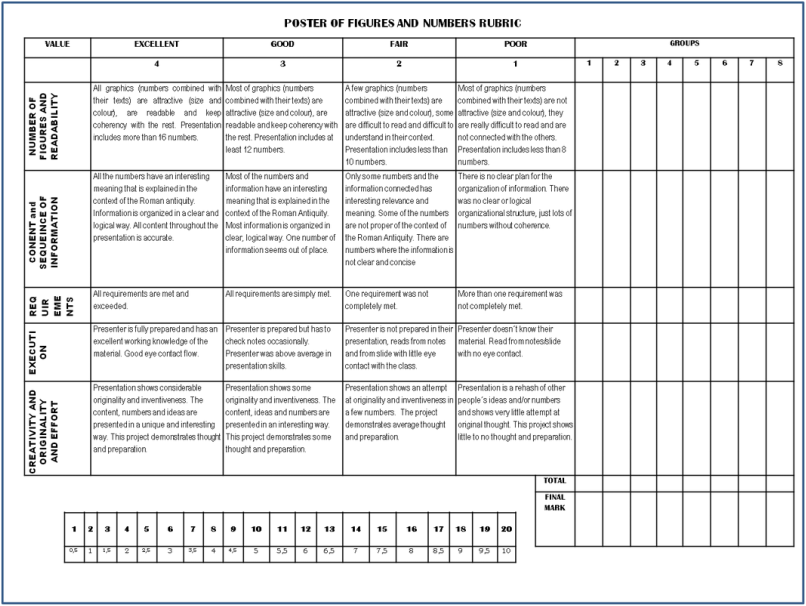
You will be assesed by me and by your partners according to the rubric below. It is not necessary to print it, I will provide you with them. 

I would like you to have a look at it in order to know how you are going to be assessed and what requirements you have to follow.
Picture

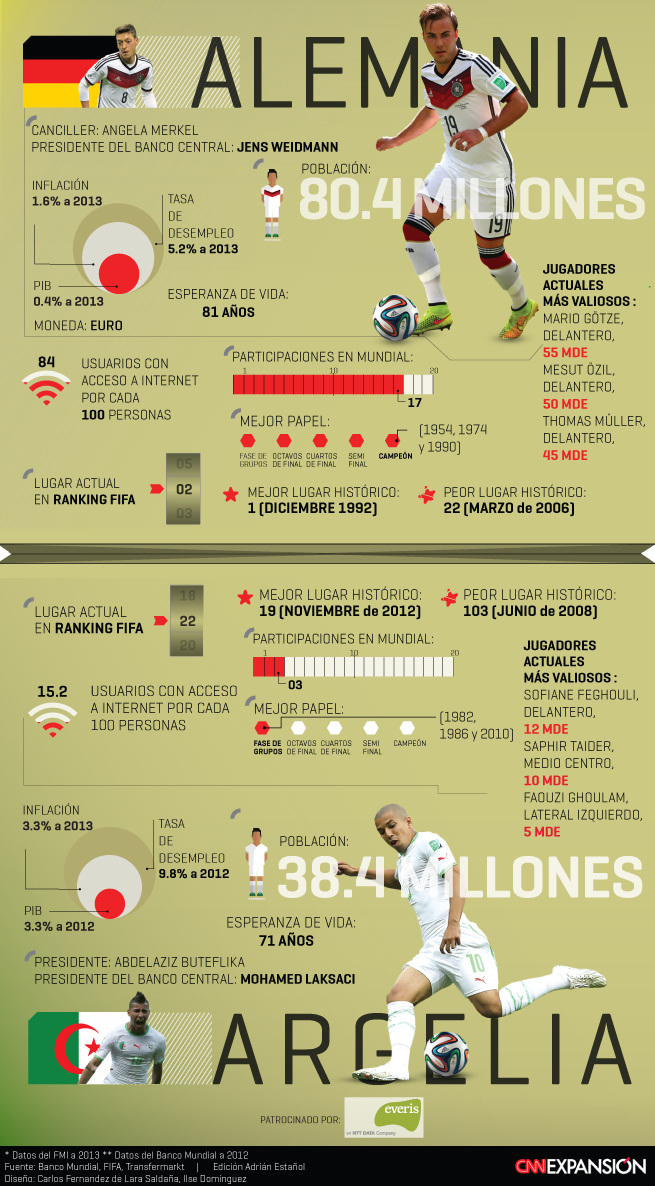
MODEL TO GIVE YOU AN IDEA

Picture
Powered by Create your own unique website with customizable templates.